Subaru Outback vs. Forester Comparison
Subaru Outback vs. Subaru Forester: Which Should You Buy?
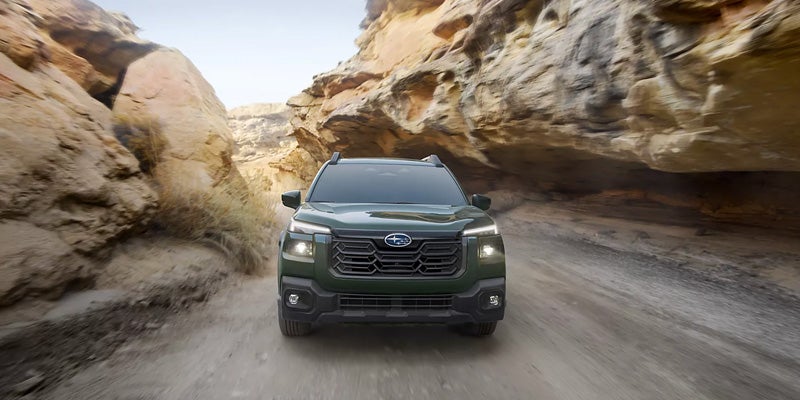
Choosing between the Subaru Outback and Subaru Forester is not simply a question of which vehicle is bigger. Both offer standard Symmetrical All-Wheel Drive, flexible seating for five, and the versatility to handle everyday driving in northeastern Pennsylvania. The better choice comes down to how you use your vehicle: whether you value extra cargo length for weekend gear, prefer a taller SUV seating position, need additional towing capability, or want a vehicle that feels comfortable on your daily commute.
At Fairway Subaru in Hazle Township, we help drivers compare these two popular models based on their actual needs. This guide breaks down the differences so you can decide whether the Outback or Forester makes more sense for your household, your driving habits, and the roads you travel around Hazleton, Wilkes-Barre, and the surrounding communities.
The Quick Answer
Choose the Subaru Outback if you want a longer cargo area, an available turbocharged engine, or greater towing capacity on select trims.
Choose the Subaru Forester if you prefer a more upright SUV design, a compact exterior footprint, and a roomy, open-feeling cabin with excellent everyday versatility.
Subaru Outback vs. Forester: Side-by-Side Comparison
Start with the specifications that have the biggest impact on ownership. The following comparison uses 2026 model-year figures; individual trim levels may differ.
| Feature | 2026 Subaru Outback | 2026 Subaru Forester |
|---|---|---|
| Vehicle style | Midsize crossover with a longer body | Compact SUV with a taller profile |
| Seating | Up to 5 passengers | Up to 5 passengers |
| Standard engine | 2.5L SUBARU BOXER 4-cylinder | 2.5L SUBARU BOXER 4-cylinder |
| Standard engine output | 180 horsepower | 180 horsepower |
| Available turbo engine | Yes, on select trims | No conventional gas turbo option in the 2026 lineup |
| Standard ground clearance | 8.7 inches | 8.7 inches |
| Maximum cargo volume | Up to 80.5 cubic feet | Up to 74.4 cubic feet on the Base trim; 69.1 cubic feet on many other trims |
| Maximum towing capacity | Up to 3,500 pounds on select trims | Up to 3,500 pounds on Wilderness; 1,500 pounds on other trims |
| Best starting point | Drivers who prioritize cargo length, highway comfort, or available turbo power | Drivers who prioritize an upright cabin, everyday flexibility, and compact SUV proportions |
Specifications are based on published 2026 model-year information. Cargo volume, towing ratings, equipment, and other features vary by trim and configuration. Always check the owner's manual and the specific vehicle's ratings before towing.
1. Size and Everyday Driving: Which Feels Right?

Why the Subaru Outback May Suit You
The Outback's longer body gives it a distinct advantage when you regularly carry lengthy items or want more room to arrange luggage behind the second row. Its overall shape is also worth considering if you spend a lot of time on highways, travel between communities for work, or take longer road trips throughout Pennsylvania.
The Outback is the better place to start if you like a wagon-inspired profile combined with crossover capability. It is longer than the Forester, so consider your garage, parking space, and usual parking conditions before deciding.
Why the Subaru Forester May Suit You
The Forester has a taller, more traditional SUV shape and is shorter overall than the Outback. That combination can be appealing if you prefer an upright view of the road and want a vehicle that is easier to position in tight parking spaces. Its broad windows and open cabin design are also worth experiencing in person if visibility and the feeling of space are high on your list.
For errands around Hazleton, school and activity drop-offs, grocery runs, and everyday commuting, the Forester offers a practical balance of passenger room and manageable exterior dimensions.
Which one wins on size?
The Outback is longer and offers more maximum cargo volume. The Forester is shorter and taller, which may be preferable if you value an upright seating position and easier maneuvering. Neither is automatically better for every driver; try loading your usual gear and sitting in both cabins before making your choice.
2. Cargo Space: Which Subaru Holds More?
Cargo capacity matters most when it fits the things you actually carry. Maximum cubic footage is useful for comparing vehicles, but the shape of the cargo area and how easily you can load it are just as important.
Subaru Outback: Extra Room for Longer Loads
With up to 80.5 cubic feet of cargo volume when the rear seatbacks are lowered, the Outback is a strong option for road-trip luggage, outdoor equipment, home-improvement purchases, and longer items. Its extended cargo layout may also help when you're trying to fit several bags without stacking everything to the roof.
Subaru Forester: Flexible Space for Daily Life
The Forester offers up to 74.4 cubic feet of cargo volume on the Base trim and up to 69.1 cubic feet on many other 2026 trims with the rear seatbacks lowered. Its taller SUV design can make the cargo area convenient for everyday items, bags, and equipment that you load frequently.
If you often carry a stroller, sports equipment, groceries, camping supplies, or a pet's travel gear, bring a few representative items to your test drive. Checking the liftgate opening and the height of the cargo floor can tell you more than a specification sheet alone.
Cargo Space Verdict
Choose the Outback if maximum cargo volume and a longer load area are priorities. Choose the Forester if its cargo layout and upright SUV design work better for your everyday routine. If you regularly carry bulky items, compare the exact trim levels rather than relying only on each model's maximum figure.
3. Winter Driving in Northeastern Pennsylvania
Winter weather is an important consideration for drivers in Hazle Township and the greater Hazleton area. Snow-covered neighborhood streets, slushy intersections, uneven pavement, and changing road conditions make traction and ground clearance useful factors when choosing a daily driver.
Both the Outback and Forester come with Subaru Symmetrical All-Wheel Drive and 8.7 inches of standard ground clearance in their regular configurations. That shared capability means you do not necessarily need to choose one model over the other just to get all-wheel drive for winter commuting.
The Wilderness versions add more ground clearance and off-road-oriented equipment. The 2026 Outback Wilderness has 9.5 inches of ground clearance, while the 2026 Forester Wilderness has 9.3 inches. If your routine includes rough access roads, outdoor recreation, or frequent travel on less-maintained surfaces, compare these trims as well.
Remember that all-wheel drive does not replace appropriate winter tires, safe following distances, or careful driving. Tire condition and road conditions still play a major role in how a vehicle accelerates, turns, and stops.
For most local drivers, the practical decision is whether you prefer the Outback's longer layout or the Forester's more upright cabin. Both can be sensible choices for four-season driving when properly equipped.
4. Engine Performance and Towing Capacity
The standard engines in the 2026 Outback and Forester both produce 180 horsepower. The main difference appears when you look at the Outback's available turbocharged engine and the towing ratings of specific trims.
When the Outback Makes More Sense
Select Outback trims offer a 2.4-liter turbocharged SUBARU BOXER engine producing 260 horsepower. This is worth considering if you want stronger acceleration for highway merging or you regularly travel with passengers and cargo. The Outback is rated to tow up to 3,500 pounds on select trims, while other configurations are rated for less.
When the Forester Is Enough
For routine commuting, shopping, family travel, and outdoor activities that do not require extra towing capacity, the Forester's standard 180-horsepower engine may be all you need. Most 2026 Forester trims are rated to tow up to 1,500 pounds, while the Forester Wilderness is rated for up to 3,500 pounds.
| Towing consideration | Outback | Forester |
|---|---|---|
| Typical standard-trim rating | Up to 2,700 lbs on select standard-engine trims | Up to 1,500 lbs on most trims |
| Maximum rating on select trims | Up to 3,500 lbs | Up to 3,500 lbs on Wilderness |
| Available turbocharged gas engine | Yes, on select trims | No, for the 2026 conventional gas lineup |
Towing capacities depend on the exact trim and configuration. Trailer weight, passengers, cargo, tongue weight, and equipment all matter. Confirm the rating for the specific vehicle and consult its owner's manual before towing.
5. Interior Comfort, Visibility, and Technology
You may spend more time sitting in your Subaru during your regular commute than on a long adventure. That makes seat comfort, visibility, controls, and cabin layout important parts of the comparison.
The Outback Experience
The Outback combines a longer body with a spacious cabin and a cargo area suited to longer items. Depending on the trim, you can also find additional comfort and convenience features. It is worth exploring if you regularly travel longer distances or want a vehicle that can transition from weekday commuting to weekend road trips.
The Forester Experience
The Forester's taller profile and large windows help create an open-feeling cabin. Drivers who prefer a more upright seating position may find it particularly comfortable. Its practical shape also makes it a good candidate for everyday errands and frequent passenger or cargo loading.
Available infotainment, driver-assistance, audio, and upholstery features differ by trim and model year. Compare the equipment on the actual vehicles you are considering, and spend time adjusting the driver's seat, testing visibility, connecting your phone, and checking how easily you can reach the controls.
6. Which Subaru Is Better for Your Lifestyle?
The best model is the one that solves the most common challenges in your daily routine. Use these examples to narrow down your choice before visiting Fairway Subaru.
The Outback May Be Right for You If...
- You regularly take longer road trips.
- You need room for longer cargo items.
- You want an available turbocharged engine.
- You need higher towing capacity on a properly equipped trim.
- You prefer a longer, wagon-inspired crossover design.
- You want to compare the Outback Wilderness for outdoor use.
The Forester May Be Right for You If...
- You prefer a taller, traditional SUV shape.
- You value an open-feeling cabin and large windows.
- You want a shorter vehicle for everyday parking.
- Your routine centers on commuting and errands.
- You need flexible seating and cargo space for daily life.
- You want to compare the Forester Wilderness for outdoor use.
7. Compare Subaru Outback and Forester Trims Before You Decide
Choosing the right model is only the first step. Trim levels can change the equipment, comfort features, engine availability, ground clearance, and towing capability. A well-equipped Forester may be a better fit than a base Outback for one driver, while another driver may find that an Outback XT or Wilderness trim better meets their needs.
Before deciding, compare the actual vehicles available at Fairway Subaru. Look at the equipment that matters most to you, review the price and payment options that fit your budget, and consider whether you will use the extra features often enough to justify the difference.
Frequently Asked Questions: Subaru Outback vs. Forester
Yes, the 2026 Outback is longer overall and offers up to 80.5 cubic feet of maximum cargo volume. The 2026 Forester is shorter and taller, with up to 74.4 cubic feet of cargo volume on the Base trim and up to 69.1 cubic feet on many other trims. The better choice depends on the shape of the cargo and the space you use most often.
Both models have standard Symmetrical All-Wheel Drive and 8.7 inches of ground clearance in standard configurations. Both can be suitable for winter driving around Hazle Township when properly equipped. Wilderness trims provide additional ground clearance, but winter tires, road conditions, and safe driving remain important.
The 2026 Outback offers up to 80.5 cubic feet with the rear seatbacks lowered. The 2026 Forester offers up to 74.4 cubic feet on the Base trim and up to 69.1 cubic feet on many other trims. Compare the exact trim and cargo layout if you frequently carry bulky items.
Both models can reach a maximum rated towing capacity of 3,500 pounds on select trims. The Outback offers that rating on select XT and Wilderness models, while the Forester Wilderness is rated for up to 3,500 pounds. Most other Forester trims are rated for up to 1,500 pounds. Confirm the exact vehicle rating before towing.
Yes. Select 2026 Outback trims offer a 2.4-liter turbocharged SUBARU BOXER engine producing 260 horsepower. The 2026 conventional gas Forester lineup uses a 2.5-liter SUBARU BOXER engine producing 180 horsepower. Engine availability can change by model year and trim.
Yes. Visit Fairway Subaru in Hazle Township, Pennsylvania, to review available models and arrange a test drive. Comparing seating position, visibility, cargo access, and ride comfort in person can help you determine which Subaru best fits your routine. Availability varies, so check current inventory before visiting.
Find Your Subaru at Fairway Subaru
Still deciding between the Subaru Outback and Subaru Forester? Compare available vehicles, explore trim-level features, and schedule a test drive to see which one feels right for you. Fairway Subaru is here to help you make an informed choice for driving around Hazle Township and beyond.
Shop New Subaru Inventory Explore Subaru Specials
* Although every reasonable effort has been made to ensure the accuracy of the information contained on this site, absolute accuracy cannot be guaranteed. This site, and all information and materials appearing on it, are presented to the user "as is" without warranty of any kind, either express or implied, including but not limited to the implied warranties of merchantability, fitness for a particular purpose, title or non-infringement. All vehicles are subject to prior sale. Price does not include applicable tax, title, and license. Not responsible for typographical errors. **The arrival timeline is an estimate. It may vary due to circumstances beyond Subaru’s or the retailer’s control. Price is plus tax, title, license, optional equipment, and a dealer documentation fee of $485.
More Info